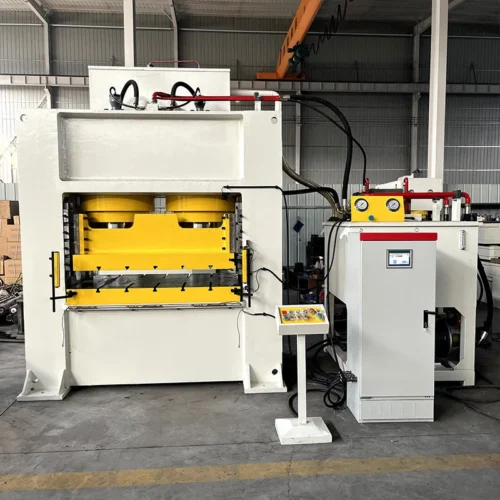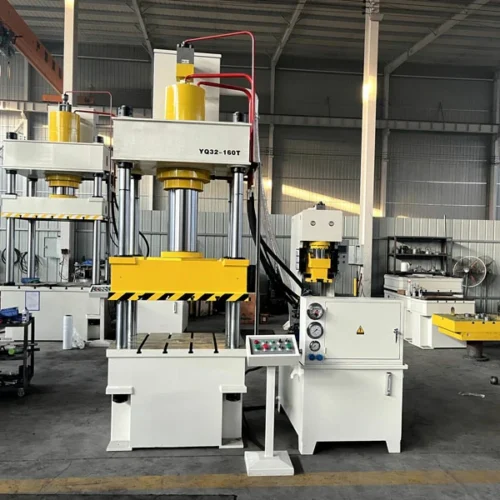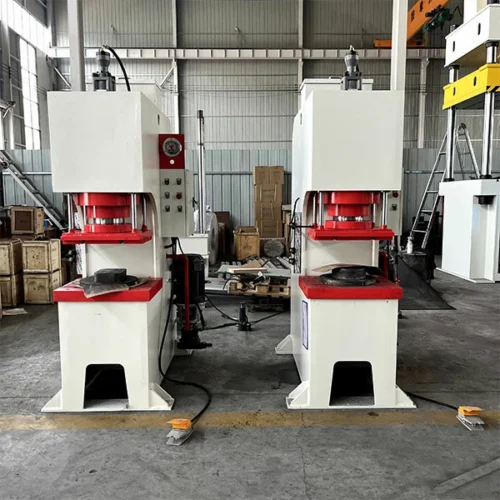

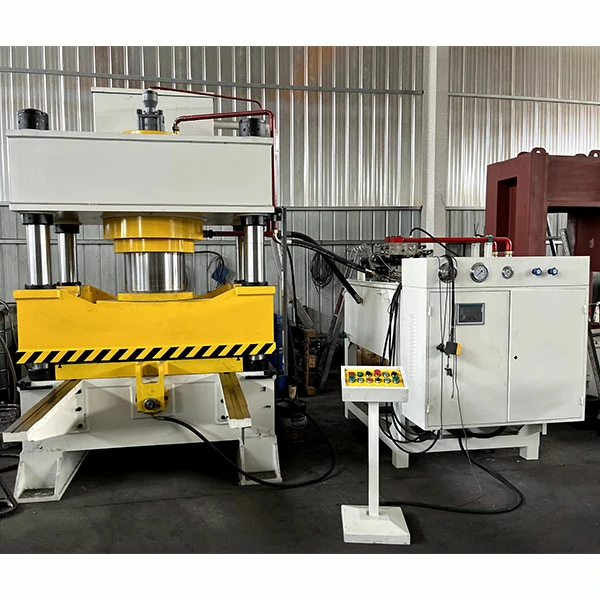

500 Ton Four Column Hydraulic Press with Movable Worktable for Heavy Metal Forming
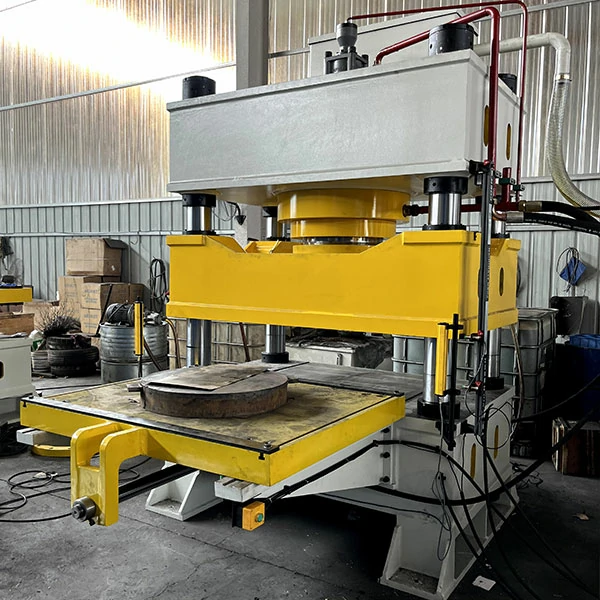
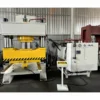
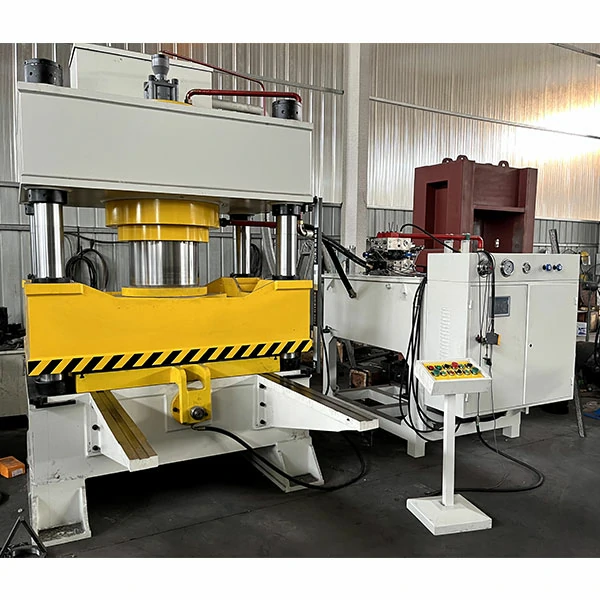
A 500 ton four column hydraulic press rated for heavy-duty metal forming delivers stable force output across a 1300x1100mm worktable that slides 1100mm out of the frame. The 47kW servo motor drives a servo hydraulic system that adjusts motor speed according to operating requirements. This means power draw tracks actual load rather than running at full capacity during idle portions of the cycle. With a customized 300mm daylight and 300mm stroke, this machine is specifically engineered for pressing, correction, and forming work on large automotive parts, structural plates, and heavy industrial components, prioritizing maximum frame rigidity and fast cycle times over long-stroke deep drawing operations.
Applications
Automotive suppliers use this press for stamping chassis reinforcement plates and pressing large bearing assemblies into housings. The 500-ton main cylinder applies uniform force across the full 1300mm table width, while the movable worktable lets operators roll heavy fixtures into position without overhead lifting gear.
Metal fabrication shops run plate flattening and bending correction on thick structural steel. The four-column guided platen maintains parallelism under off-center loads that would tilt a less rigid frame, and the sliding table brings the workpiece to the operator instead of forcing them to climb onto the press bed.
Die manufacturers and mold shops rely on the movable worktable for outside-the-press mold mounting. Since a 1300x1100mm die set often weighs more than a single operator can position by hand, sliding the table out to floor level removes the bottleneck of crane scheduling during every tool change.
Heavy equipment rebuilders press shafts, gears, and flanged couplings with interference fits up to 500 tons. The 300mm stroke provides the exact, controlled ram travel needed for full press-to-seat distance on large-diameter components, and the servo system holds pressure precisely at the bottom of the stroke without the pressure spikes common to conventional pump systems.
Industrial maintenance departments correct warped steel plates and structural profiles on the 1300mm table. The generous surface area supports full-length plate support without overhang, and the four-column frame resists the frame twist that occurs when correction force is applied asymmetrically across a single large plate.
Industries
Automotive Manufacturing: Pressing bearing races, brake backing plates, and chassis stampings where high tonnage and consistent ram control are critical for part-to-part repeatability across long production runs.
Structural Steel Fabrication: Flattening welded plates and correcting heat-distorted beams. The movable worktable supports plate sizes that would overhang a standard fixed table, and the 500-ton capacity handles the thick sections common in bridge and building components.
General Machinery Workshops: Assembling large gearboxes and press-fitting shafts into housings. The four-column structure keeps the ram square under the eccentric loads typical of shaft pressing, and the servo drive allows slow, controlled approach speeds that prevent galling on precision fits.
Metal Forming Shops: Running blanking and shallow forming on heavy-gauge sheet. The 300mm daylight accommodates tooling stacks for thick material, and the servo motor enables programmable speed curves that reduce shear shock during blanking cycles.
Key Features
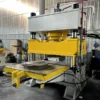
- Efficient Mold Handling: For heavy mold sets, the 1300x1100mm movable worktable slides out 1100mm from the press centerline. Operators can preload dies on a rolling cart at floor level and roll them directly into the press throat, significantly reducing changeover time compared to traditional overhead-crane sequences.
- Superior Off-Center Load Capacity: When pressing large stampings or structural plates where off-center loading is unavoidable, the three-beam four-column frame distributes force through four guided columns. This helps distribute pressing force more evenly across the working area and resists tilt under asymmetric loads that would deflect a C-frame press.
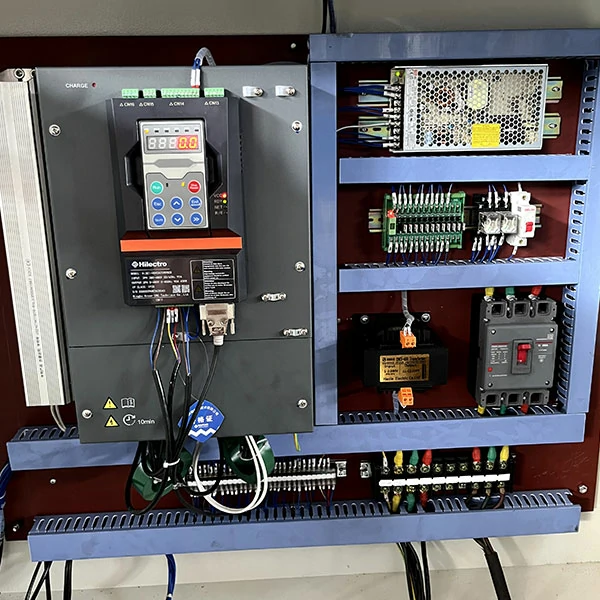
- Energy-Efficient Servo Drive: The 47kW servo motor drives a servo hydraulic system that adjusts motor speed according to operating requirements. Idle power consumption drops significantly compared to a fixed-speed pump, and the programmable pressure profile supports slow-speed forming on sensitive materials without needing a separate low-speed valve circuit.
- Compact Stroke Design for Heavy-Duty Pressing: Featuring a customized 300mm stroke and 300mm max daylight, this press is optimized for precision press-fitting, coining, and heavy plate correction. This compact travel distance maximizes frame rigidity under extreme 500-ton loads, helps reduce unnecessary mechanical stress on guiding components, and speeds up cycle times by eliminating unnecessary ram travel.
- Precision Guidance and Stable Pressing Accuracy: The four-column guiding system maintains stable platen movement and improves alignment during repeated pressing cycles, ensuring consistent part quality, especially for large dies and heavy components.
- Centralized Force Distribution: The 500-ton centralized main cylinder generates force through a single large piston rather than multiple smaller cylinders, helping maintain more uniform pressure distribution during large-area pressing operations.
Technical Specifications
| Parameter | Value |
|---|---|
| Model | YQ32-500 |
| Nominal Pressure | 500 Ton |
| Worktable Size | 1300 x 1100 mm |
| Worktable Moving Distance | 1100 mm |
| Max. Daylight (Opening) | 300 mm |
| Stroke | 300 mm |
| Servo Motor Power | 47 kW |
| Structure | Three-Beam Four-Column |
Typical Application Materials
- Carbon steel & High-strength low-alloy (HSLA) steel
- Stainless steel plates and structural profiles
- Aluminum alloy components
- Heavy metal plates and forged components
Note: Final machine configuration and tooling recommendations depend on specific material thickness, yield strength, and forming requirements.
Standard Configuration and Core Components
- 47kW servo motor with variable-frequency drive (VFD)
- Three-beam four-column welded steel frame, stress-relieved
- 1300x1100mm movable worktable with hardened sliding rails
- Centralized main hydraulic cylinder, 500-ton rated
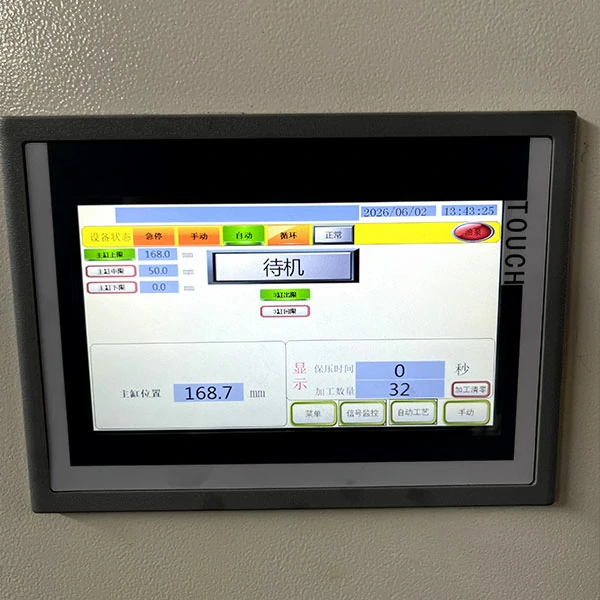
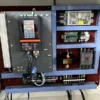
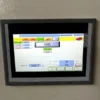
- PLC control system with touch-screen operator interface
- Hydraulic valve manifold with precise pressure and flow regulation
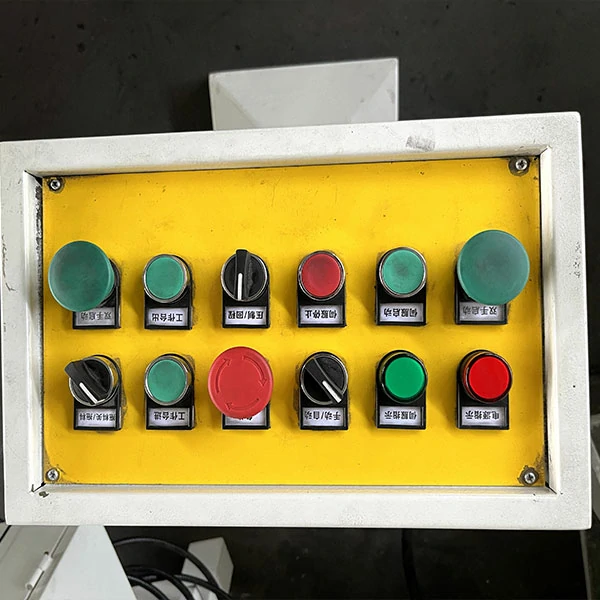
- Safety light curtain and two-hand control circuit
- Emergency stop and hydraulic overload protection
Custom Hydraulic Press Solutions
We understand that every production line is unique. For this tonnage class, worktable size, stroke, opening height, hydraulic system configuration, and control logic can be fully customized according to your specific part drawings and production volume requirements. Contact our engineering team or explore our custom hydraulic press solutions to discuss your exact specifications.
Installation Note: Proper foundation design is required according to machine weight, operating conditions, and local installation requirements. We provide detailed foundation drawings to assist your local engineering team in ensuring safe and stable operation.
FAQ
What is the difference between four-column and C-frame presses?
Four-column presses use four guided posts to keep the ram parallel to the bed under load, which minimizes frame deformation under heavy loading conditions and supports off-center work. C-frame presses rely on a single throat section that is economical for light work but shows measurable ram deflection once the tooling load moves off the centerline. For heavy forming and large worktables, the four-column structure is the standard choice.
How does the movable worktable improve production efficiency?
The 1300x1100mm worktable slides 1100mm out of the press frame, allowing operators to mount dies and load heavy workpieces at floor level without overhead crane assistance. This significantly reduces mold changeover time and reduces the need for repeated overhead lifting operations during mold installation, improving overall shop floor safety.
What floor foundation requirements apply to a 500-ton four-column press?
A 500-ton press generates significant reaction force during forming and correction cycles. Proper foundation design is required according to machine weight, operating conditions, and local soil conditions. We provide detailed foundation drawings to assist your local engineering team in ensuring safe and stable operation.
Is a servo pump upgrade worth it for batch production?
Yes. The 47kW servo motor adjusts motor speed to match real-time demand, which reduces idle power draw compared to a fixed-speed pump running constantly. For batch production with frequent idle periods between cycles, the servo system pays back through lower energy bills and reduced hydraulic oil heating, despite a higher upfront cost than a conventional motor-pump group.
Can a four-column press handle off-center loading without ram tilt?
The four-column guided platen resists tilt under asymmetric loads by distributing reaction force through four posts rather than a single throat. On this 500-ton machine, the 1300mm column span and guided platen maintain parallelism during off-center pressing typical of large plate correction, though extreme eccentricity beyond the column envelope should still be avoided to protect guide bushings.
Large mold changeovers on a fixed worktable cost time and crane capacity. The 1300x1100mm movable worktable on this 500-ton four-column hydraulic press removes that bottleneck. Send your part drawing and forming requirements for a pressing solution proposal tailored to your die size and production volume.