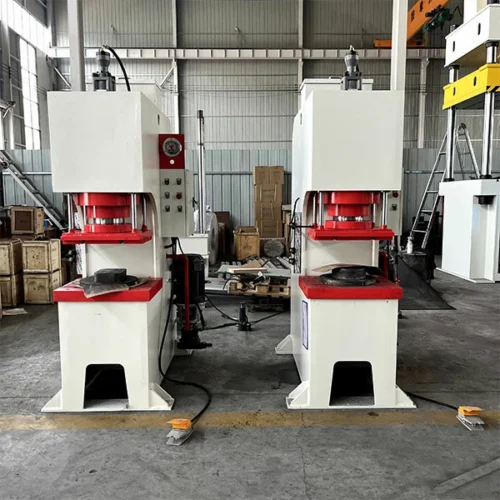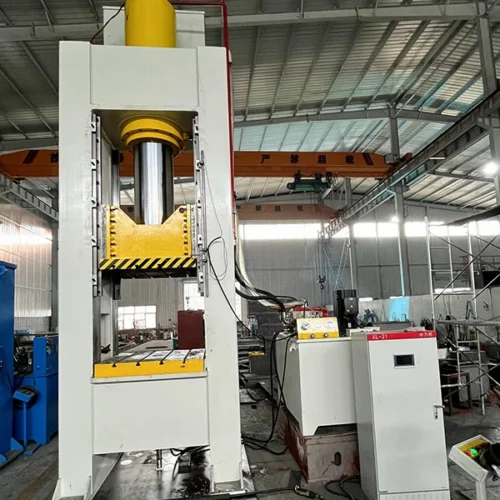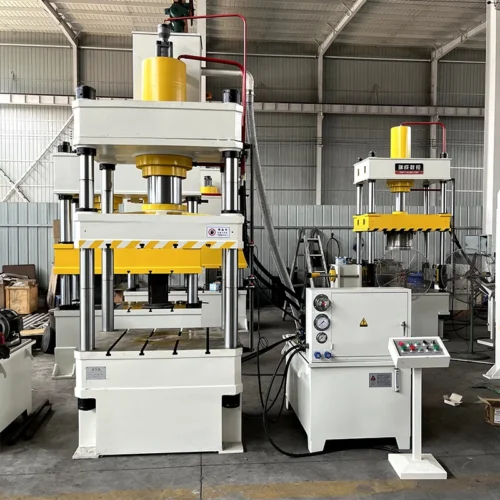

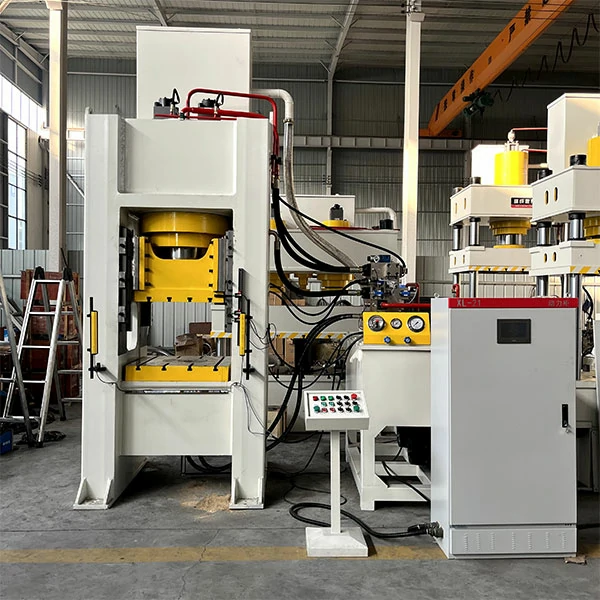
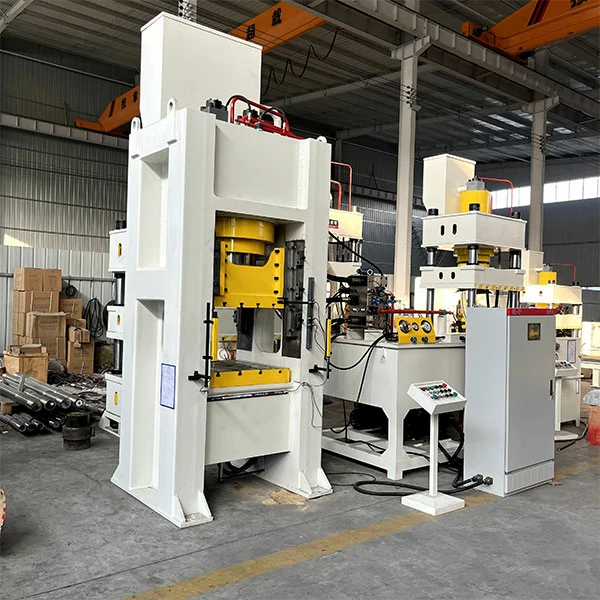
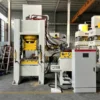
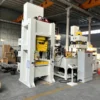

An 800 ton closed frame hydraulic press combines fast approach, controlled forming, and powered ejection for demanding composite molding and metal forming applications. Its 260 mm/s fast-down speed reduces non-forming travel time, while the 8–15 mm/s pressing speed provides controlled movement during the forming stage.
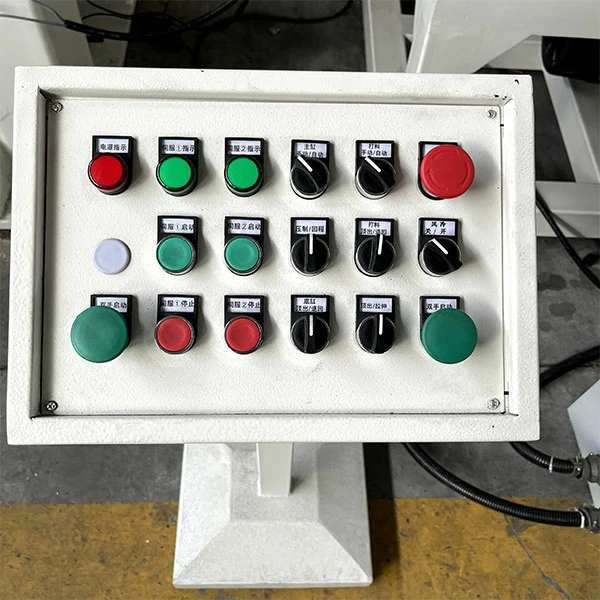
A 1400 mm main cylinder stroke and a 100 ton lower ejector cylinder with a 300 mm stroke handle tall tooling and powered part ejection, while dual 18.5 kW servo motors and an integrated PLC touchscreen drive and program the full cycle on 380V power. A light curtain and an air cooling system round out the standard safety and thermal management build.
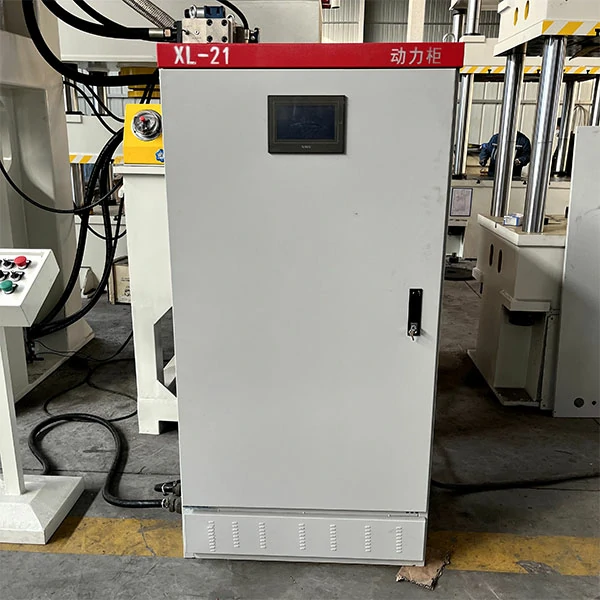
800 Ton Closed Frame Hydraulic Press Key Features
When the approach distance between the open ram and the mold face is large relative to the actual forming depth, the 260 mm/s fast-down speed closes that gap quickly. The press can use a fast-down speed of 260 mm/s for the approach phase and a controlled pressing speed of 8–15 mm/s during forming, which keeps cycle time short on the approach without forcing that same fast rate through the forming stroke where shock-loading the mold matters.
The 100 ton lower ejector cylinder with a 300 mm stroke pushes a formed or molded part back up out of the die or mold cavity after the main ram retracts, rather than requiring a separate knockout mechanism or manual removal on parts that seat deep in the tool.
A light curtain helps protect the operator access area around the pressing zone by stopping the press when the safety field is interrupted.
The air cooling system helps control hydraulic oil temperature during extended production runs, supporting stable operation over long production cycles.
Note: with an 8–15 mm/s pressing speed range, confirm the specific speed setting for each mold program in the PLC, since running a thin-wall composite mold at the fast end of that range risks the same shock-loading the slow pressing phase is meant to prevent.
For SMC or BMC molds under roughly 300 tons that do not need this stroke length or ejector capacity, the 315 ton or 630 ton closed frame models, or a smaller C Frame Hydraulic Press, cover that scale without the added cost of this frame’s speed and safety systems.
System Configurations and Features
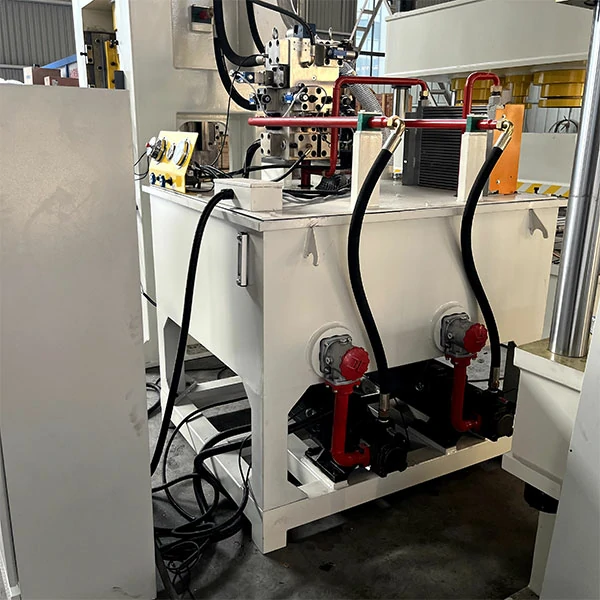
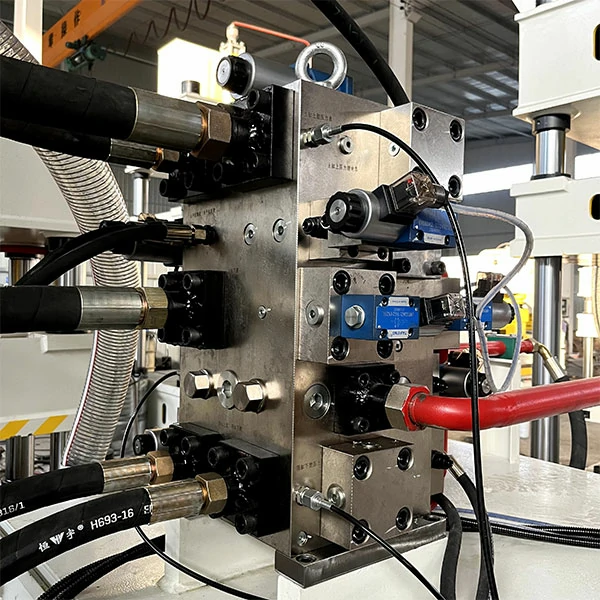
The dual 18.5 kW servo motor configuration provides the hydraulic drive capacity required for the machine’s operating cycle, distributes pump output across two motors, and supports the high flow demand of the fast-down stage.
The light curtain setup provides a photoelectric safety field around the pressing area, which keeps the front of the press open for loading large composite panels while still stopping the ram if the safety field is broken during the cycle.
The air cooling system manages hydraulic oil temperature without a water supply connection, which suits shop floors where running water cooling lines to the press is impractical, at the cost of somewhat less cooling capacity than a water-cooled system on continuous, back-to-back cycles.
Engineering Insights and Buyer Considerations
Large composite molding work needs a press that clears open distance quickly during approach but still controls forming speed precisely enough to avoid shock-loading a mold face once contact is made, and it needs powered ejection for parts that seat deep enough in the tool that manual removal is impractical.
Using separate approach and forming speeds helps balance cycle time and process control. Fast approach reduces non-forming travel time, while the lower forming speed provides more controlled movement when the mold is under load. The 100 ton lower ejector cylinder further reduces reliance on manual part removal for molds that require powered ejection.
Technical Specifications
| Parameter | Value |
|---|---|
| Rated Tonnage | 800 tons |
| Worktable Effective Area | 800 × 800 mm |
| Open Height (Daylight) | 600 mm |
| Main Cylinder Stroke | 1400 mm |
| Drive System | Dual servo motors, 18.5 kW × 2 |
| Control System | PLC with integrated touchscreen |
| Safety Guarding | Light curtain |
| Cooling System | Air cooling |
| Fast-Down Speed | 260 mm/s |
| Return Speed | 90 mm/s |
| Pressing Speed | 8–15 mm/s |
| Voltage | 380V |
| Lower Ejector Cylinder | 100 tons |
| Lower Ejector Cylinder Stroke | 300 mm |
Standard Configuration and Core Components
As a large composite molding press built for high-cycle production, this model pairs dual servo motors with light curtain guarding and air cooling for extended runs.
- Closed frame welded body structure
- Dual servo motors, 18.5 kW × 2
- PLC with integrated touchscreen
- Light curtain safety guarding
- Air cooling system
- 100 ton lower ejector cylinder, 300 mm stroke
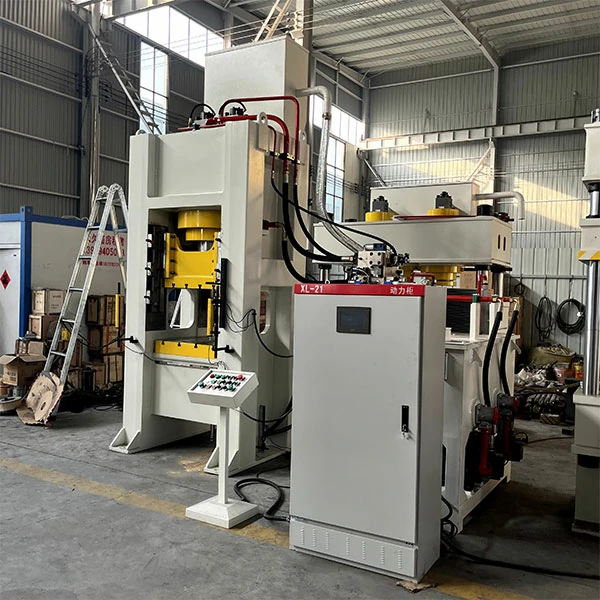
Commissioning and Maintenance Notes
Floor mounting should be leveled and anchored before first use, since an uneven base can transfer uneven load into the frame over repeated heavy cycles.
The light curtain should be tested for proper trip distance and response time as part of routine commissioning, following applicable machine guarding standards, since a light curtain that trips too late or too close to the ram defeats its purpose.
Air cooling system airflow paths are worth checking for dust buildup on a regular schedule, since restricted airflow reduces cooling capacity before oil temperature rises enough to show up as a performance problem.
Frequently Asked Questions
What does the light curtain add compared to a physical guard?
A light curtain creates a photoelectric safety field around the pressing area instead of a solid physical barrier, which keeps the front of the press open for loading large composite panels while still stopping ram travel if the safety field is broken. A physical guard blocks access more completely but limits how a large panel can be loaded and unloaded.
Why does this press run different speeds for approach, forming, and return?
The 260 mm/s fast-down speed closes open distance quickly before the mold faces make contact, the 8–15 mm/s pressing speed controls the actual forming stroke to avoid shock-loading the mold, and the 90 mm/s return speed brings the ram back up without wasting cycle time at the slow forming rate.
How does the 260 mm/s fast-down speed improve cycle time?
The 260 mm/s fast-down speed reduces the time required for the non-forming portion of the stroke, while the 8–15 mm/s pressing speed provides controlled movement during forming. The actual cycle-time improvement depends on mold height, forming stroke, pressure requirements, and process settings.
Can the 800 ton closed frame press accommodate a mold close to the 800 × 800 mm worktable size?
The 800 × 800 mm worktable provides the mounting area for tooling within its usable working envelope. Actual mold dimensions should be confirmed against the table, mounting arrangement, allowable load distribution, and press specifications before ordering.
Should I choose air cooling or a water-cooled oil cooler for continuous composite production?
Air cooling avoids running water supply lines to the press, which suits shop floors where that connection is impractical, though it typically offers somewhat less cooling capacity than a water-cooled oil cooler on continuous, back-to-back cycles. Shops running near-continuous production may still prefer the higher cooling capacity of a water-cooled system despite the extra plumbing.
What should I confirm before ordering an 800 ton closed frame press for large composite components?
Confirm the mold footprint against the 800 × 800 mm worktable and 600 mm open height of this 800 ton hydraulic forming press, check that the 1400 mm stroke and 100 ton ejector cylinder cover the tool height and ejection force needed, and verify the 380V electrical supply matches your site setup before installation.
Confirming mold footprint, speed settings, and cooling requirements before ordering avoids rework once an 800 ton closed frame hydraulic press is running large composite production. Send us your mold drawings and cycle requirements for a machine configuration review.