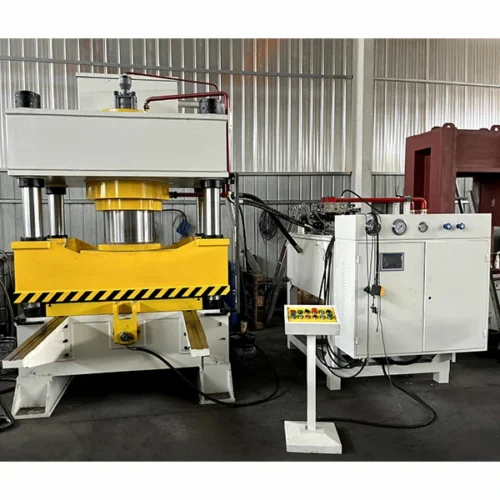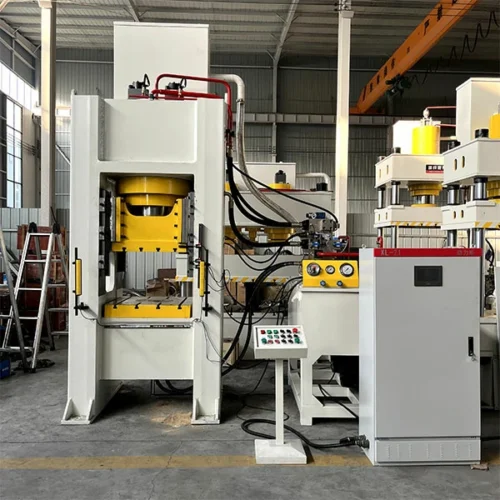

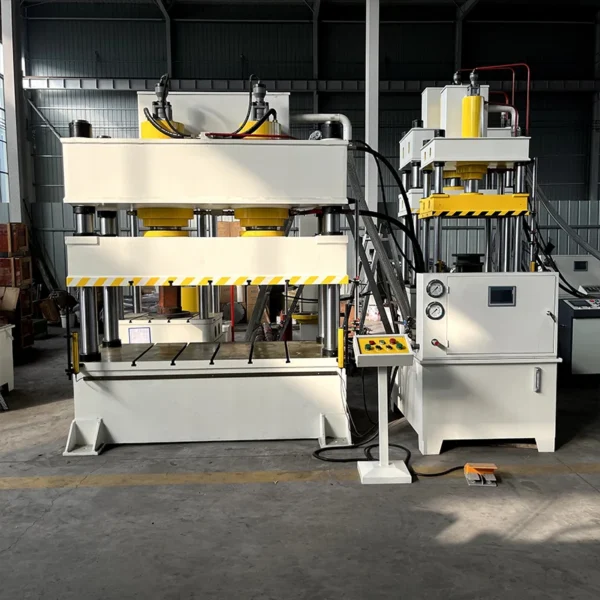
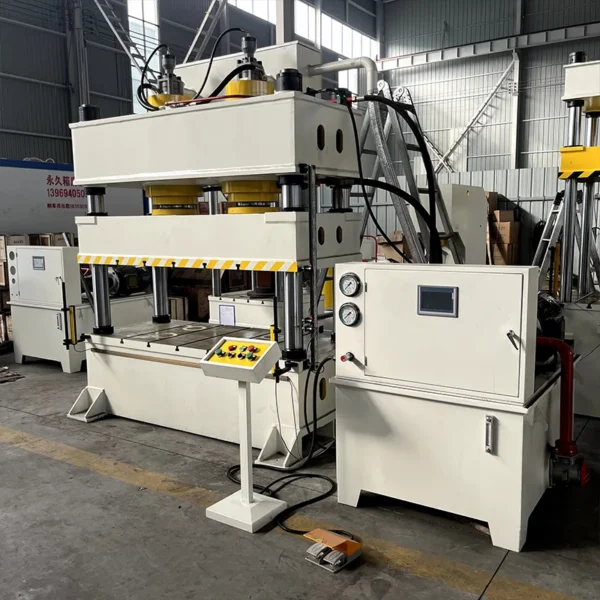
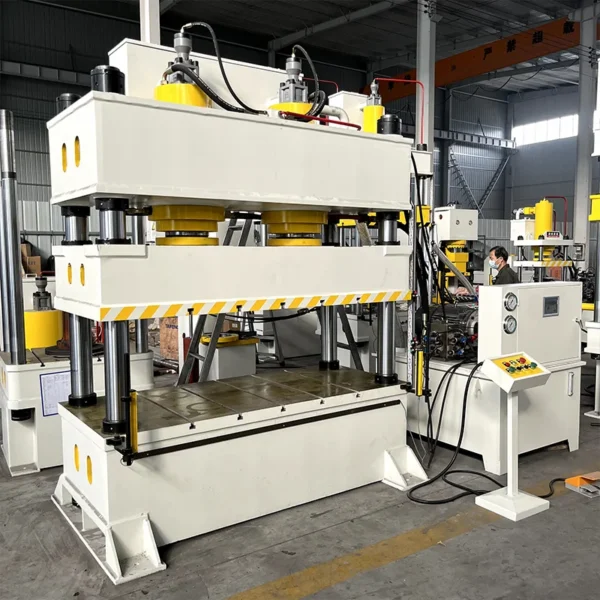
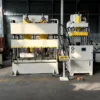
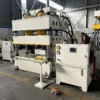
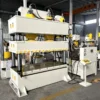
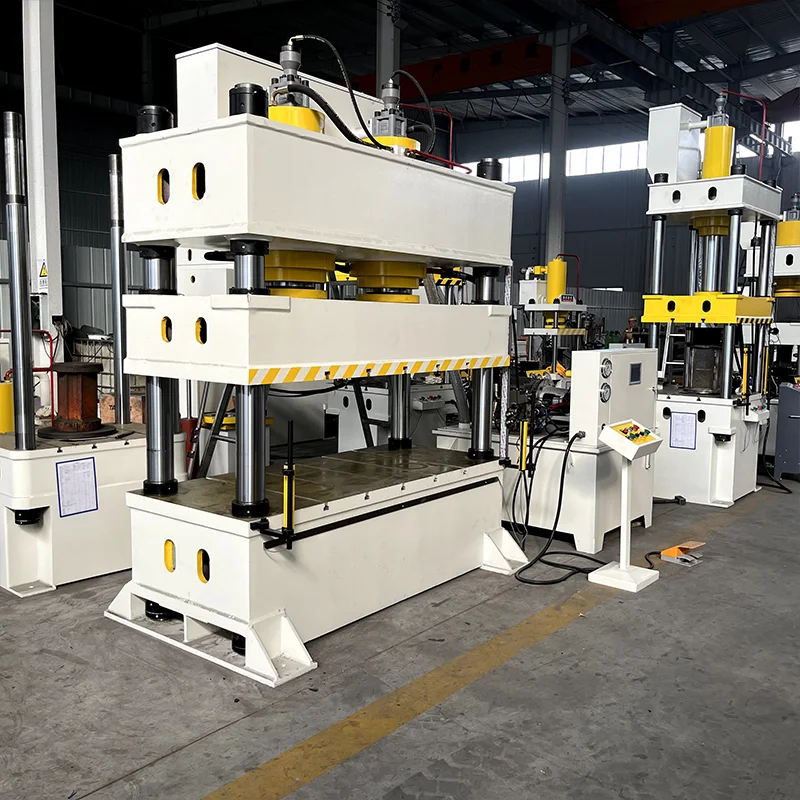
What happens when a large steel plate comes off the line with a bow or twist that a standard press cannot correct? The part gets rejected, or the distortion carries through to the next process. A hydraulic plate leveling press is built to solve this by distributing 315 tons of pressing force across an 1800×900mm worktable, so the correction happens evenly instead of in one localized spot. That distinction matters most on structural steel plates, rolled profiles, and repaired machinery parts, where an uneven correction stroke can leave one section flat while another stays warped.
Quality Control and Manufacturing Verification
- Pressure output is monitored through the PLC control loop, keeping deviation within 1 percent across the full leveling stroke rather than relying on manual gauge readings alone.
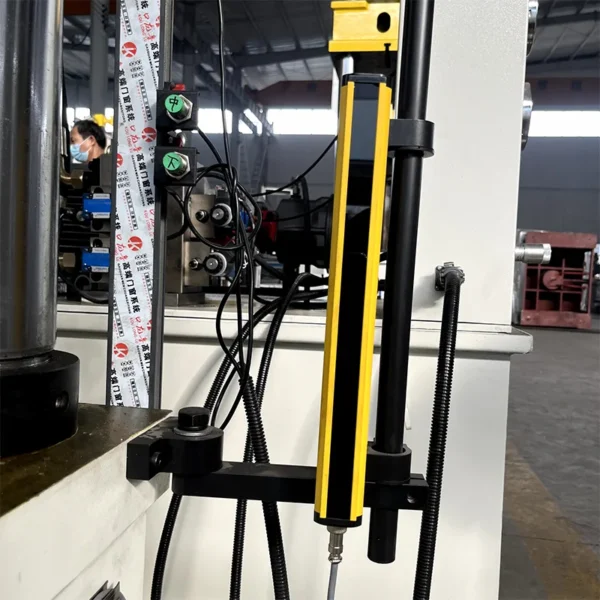
- The safety circuit, including the light curtain and emergency stop function, is aligned with CE safety requirements for press operation, consistent with guidance under OSHA Machine Guarding standards.
- Frame rigidity and stroke consistency are verified through the 7 inch touchscreen’s real time monitoring function before the machine is released for operation.
Hydraulic Plate Leveling Press Key Features
A hydraulic plate leveling press relies on frame rigidity as much as raw tonnage. On this machine, the reinforced frame structure keeps pressure deviation at or below 1 percent across the worktable, which is why a 2 meter steel plate can come out with consistent flatness edge to edge instead of a slight crown in the center.
The 7 inch PLC touchscreen gives the operator real time pressure and stroke feedback during the leveling cycle. Because the operator can see pressure trending in real time, adjustments happen before a plate is over-corrected, rather than after inspection catches it.
Safety light curtains paired with an emergency stop function protect the operator zone around the 1800×900mm table, where large plates are frequently repositioned by hand or crane between strokes.
The 22KW motor is sized to the intermittent duty cycle typical of leveling work, which supports roughly 20 percent lower power draw compared to running an oversized motor continuously through short, high-force strokes.
Engineering Insights & Buyer Considerations
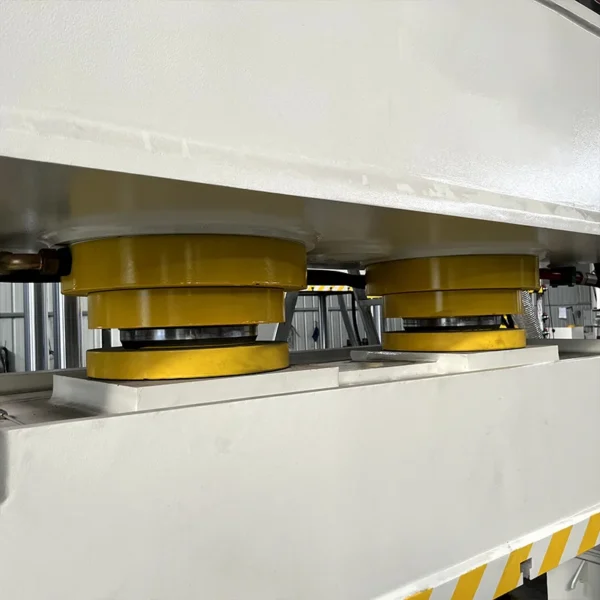
Plate leveling is a different load case than deep drawing or blanking. Instead of one deep punch stroke, the ram needs to apply distributed pressure repeatedly across a wide table, so a 450mm stroke and a 600mm daylight opening are set up for repositioning the plate between passes rather than reaching deep into a die cavity.
When a long structural profile is supported off-center on the table during straightening, uneven loading can tilt the ram slightly, which leaves one end of the profile straighter than the other. The reinforced frame geometry combined with PLC-monitored pressure feedback reduces this tilt tendency, so force distribution stays more consistent across the full 1800×900mm working area.
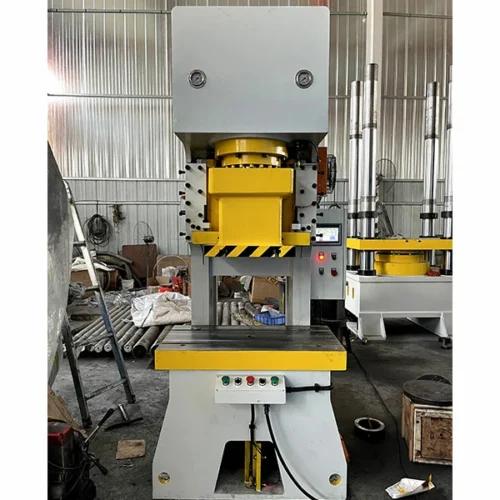
This configuration is built around flat and linear correction work. For small precision stampings or parts that need a compact ram path and tighter guiding, a C Frame Hydraulic Press is generally the better fit than a large-table leveling press like this one.
Technical Specifications
| Parameter | Value |
|---|---|
| Rated Capacity | 315 Tons |
| Worktable Size | 1800 × 900 mm |
| Daylight Opening | 600 mm |
| Stroke | 450 mm |
| Motor Power | 22 KW |
| Control System | PLC + 7 inch Touchscreen |
| Safety System | Light Curtain + Emergency Stop |
| Pressure Deviation | ≤1% for flatness control |
Standard Configuration & Core Component Parts
- PLC control system with 7 inch touchscreen interface
- Safety light curtain with emergency stop function
- 22KW main drive motor
- Reinforced frame structure for distributed pressure control
Applications
- Leveling large-format steel plates used as machinery bases, where flatness deviation needs to stay within a tight tolerance before final machining.
- Straightening rolled steel profiles after welding-induced distortion, so the profile meets dimensional tolerance before assembly.
- Correcting structural steel components that have warped during thermal processing, ahead of final fit-up.
- Repairing heavy machinery parts, such as bent frame sections or support structures returned from the field.
Materials
Material compatibility depends on the forming process (e.g., sheet metal, composite materials, or powder metallurgy). Specific material grades should be evaluated based on the actual part drawing and forming temperature.
Industries
- Industrial machinery manufacturing, where welded machine bases and support plates need correction before assembly to hold flatness tolerance.
- Automotive component suppliers use structural profile straightening for chassis and frame sections where consistent stroke control matters, as covered further on the Automotive industry page.
- Metal fabrication shops handling repair work on bent or warped heavy equipment structures returned for correction rather than replacement.
Should I choose this 315 ton press or a smaller tonnage leveling press?
Tonnage should match plate thickness and table size, not just the type of correction. This 315 ton press with a 1800×900mm table suits larger structural plates and profiles, where a smaller press would need multiple passes or lack the table area to support the full plate during correction.
What is the maximum plate size this press can level in one setup?
The worktable measures 1800 × 900mm, which sets the practical footprint for a single plate position. Larger plates can still be processed by repositioning between strokes, though leaving working margin at the table edges helps keep pressure distribution consistent during each pass.
What monitoring features come with this leveling press?
The press includes a 7 inch PLC touchscreen for real time pressure and stroke monitoring, so the operator can track deviation during the cycle instead of relying only on post-process inspection to catch flatness issues.
Is a gantry press a better option for large-scale plate correction?
It depends on plate size and how the workpiece is loaded. For very wide or long-span plates that need overhead access from multiple sides, a Gantry Hydraulic Press may suit the handling better, while this table-style press is built for plates that fit within its 1800×900mm working area.
What should I confirm before requesting a quotation for this press?
Provide plate thickness range, typical plate dimensions, and whether the work is mostly flat leveling or profile straightening. These details affect tonnage margin and table sizing, so sharing them upfront helps produce a more accurate pressing solution proposal.
Selecting the wrong tonnage or table size for plate leveling work can leave residual warp that shows up later in assembly. Share your plate thickness, dimensions, and correction type to get a pressing solution matched to your actual production need.