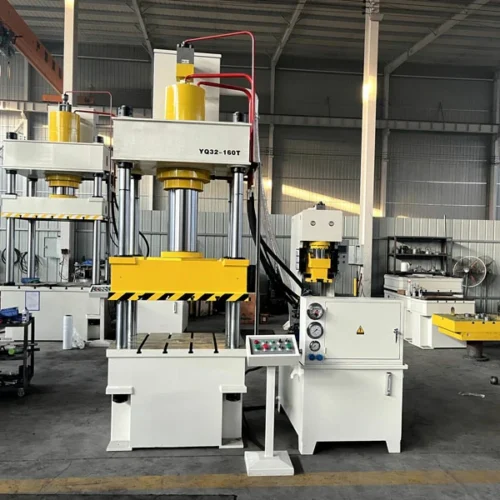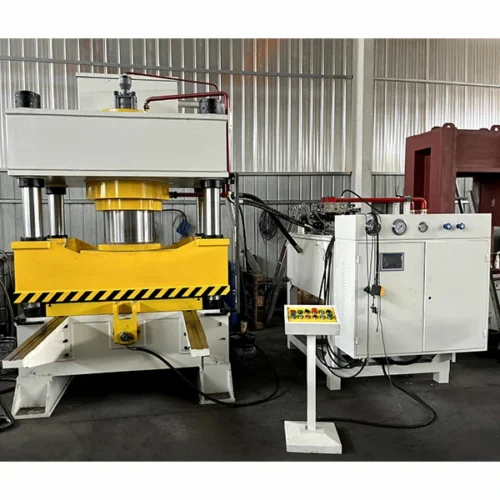

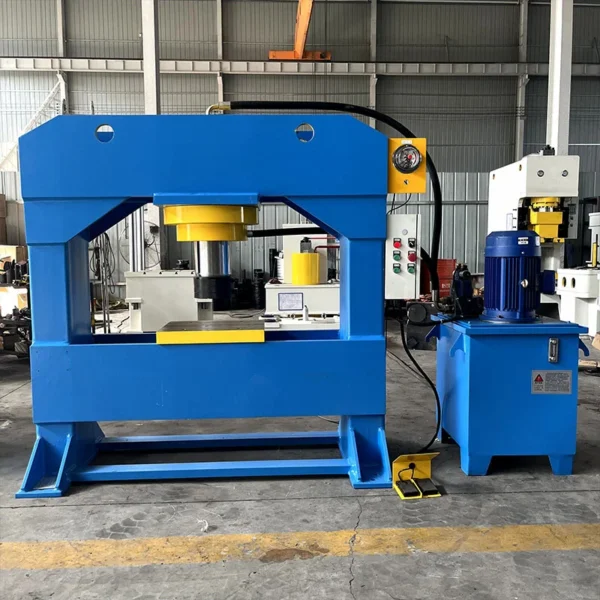
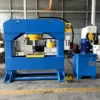
160 Ton Gantry Hydraulic Press for Flange Leveling and Structure Correction
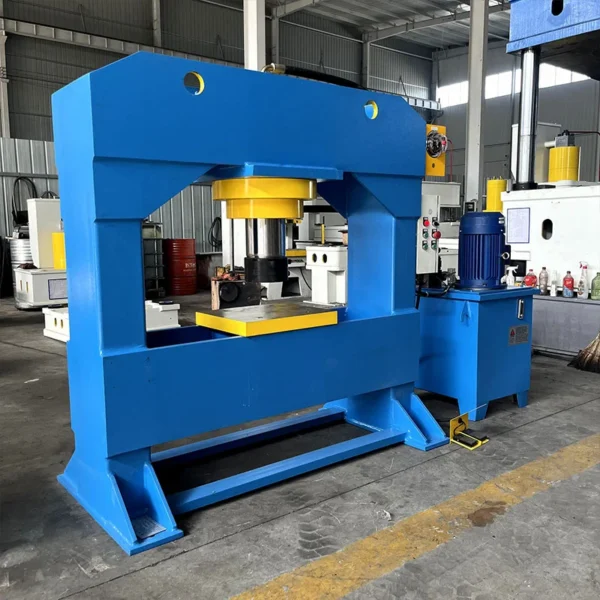
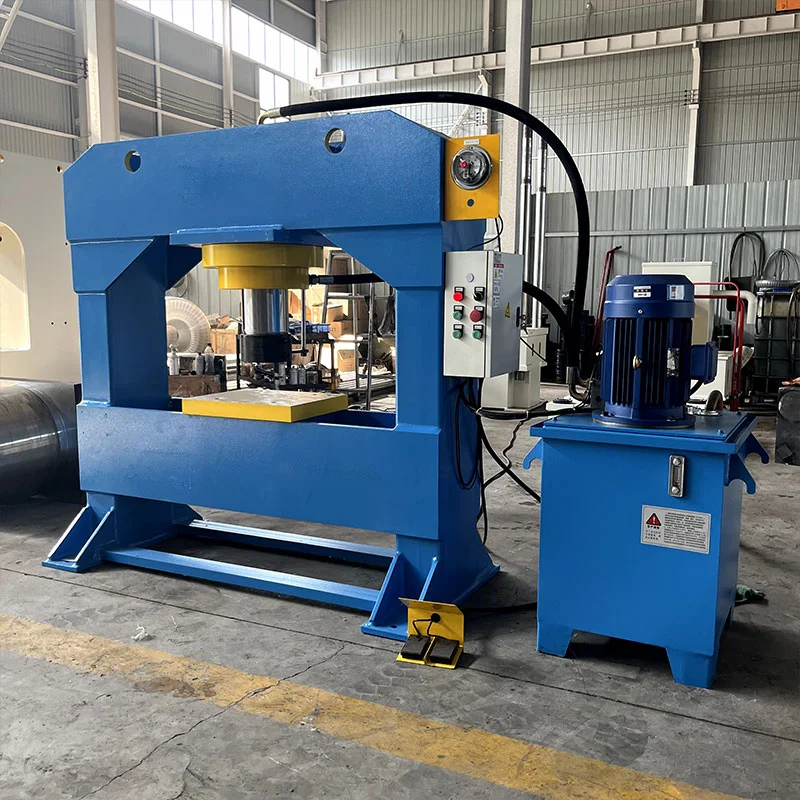
A 160 ton gantry hydraulic press with 500×400mm table and 300mm daylight delivers the force distribution needed for flange leveling, but the real constraint is how the open-frame geometry handles off-center loads during steel structure correction. The welded crossbeam and dual-column layout distribute 160 tons across the full worktable, helping achieve high leveling accuracy on metal flanges up to roughly 350mm in diameter when combined with proper tooling and workpiece support. For steel profile straightening, the 200mm stroke and open-front access let operators position I-beams or channel sections without the side-column interference of a closed-frame design.
Applications
This heavy-duty gantry press machine handles metal flange leveling on pipe connection plates and valve bodies where uniform pressure distribution prevents residual deformation. It also performs steel structure correction on welded frameworks and construction profiles that develop angular distortion after welding or transport. The open workspace allows crane loading of large components for industrial part repair, and the 500×400mm table accepts flanges up to approximately 350mm diameter with room for alignment fixtures. If you are looking for a 160 ton hydraulic press for sale that can handle both precision flange work and heavy structural correction, this gantry configuration provides the versatility needed for diverse industrial applications.
Key Features
Flange Leveling Focus with Uniform Pressure Distribution
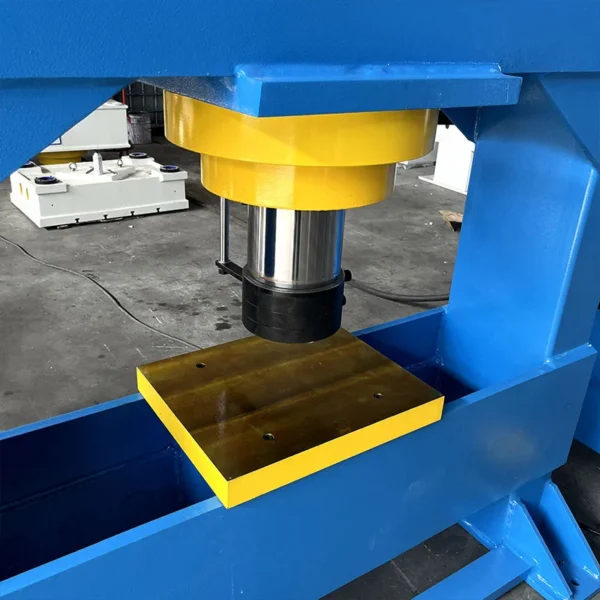
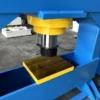
The centrally positioned hydraulic cylinder helps distribute pressing force across the work area when used with suitable tooling and support fixtures. This configuration reduces uneven deformation caused by improper load distribution during correction operations, helping achieve high leveling accuracy across the full flange face. That is why this configuration is specified for pump and valve body applications where sealing surfaces must remain true after correction.
Welded Gantry Frame with Anti-Deflection Design
The dual-column welded structure provides significantly improved rigidity and resists frame opening under load much better than conventional lighter open-side designs. When correcting steel structures or pressing large plates, the ram stays parallel to the table throughout the stroke, minimizing the taper distortion that develops when the frame flexes asymmetrically. This structural rigidity allows the 160-ton capacity to translate directly into forming force rather than being lost to frame deformation.
7.5KW Motor with Energy-Efficient Hydraulic System
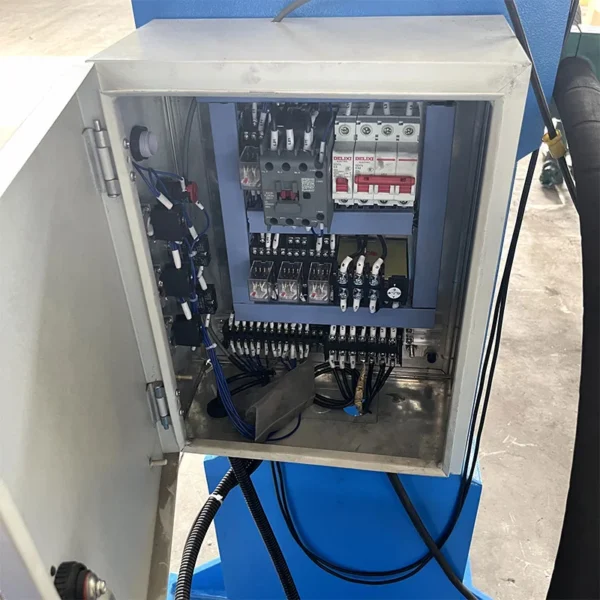
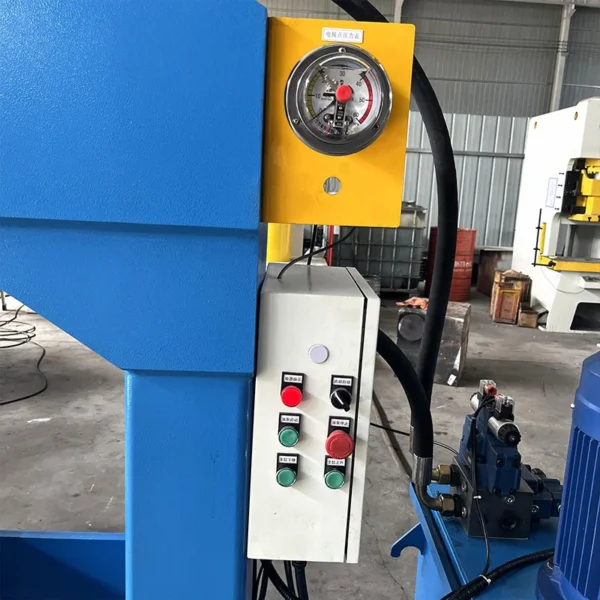
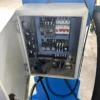
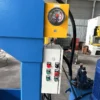
The 7.5KW (10 HP) motor drives a 380V hydraulic power unit sized specifically for the 160-ton capacity and 200mm stroke. The rigid gantry frame helps reduce energy losses that typically occur from frame flex and cylinder misalignment in less robust designs. During intermittent-duty flange leveling cycles, the pump runs only when pressure is demanded, improving overall energy efficiency compared to continuously-running systems.
Open Workspace for Large Component Access
The gantry geometry leaves three sides of the table open, so operators can load steel structures, large plates, or repair parts from the front or sides using overhead cranes or forklifts. Unlike a closed-frame press where the side columns create a fixed throat depth, this layout accepts workpieces that overhang the table edges, which is critical for straightening long structural profiles that extend well beyond the 500mm table length.
Engineering Insights & Buyer Considerations
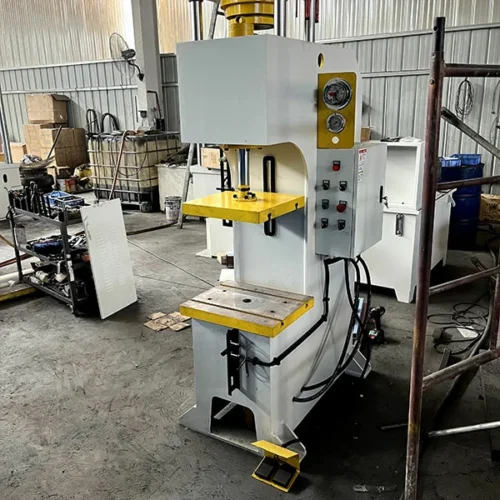
When selecting between a gantry press and a four-column press for leveling and correction work, the deciding factor is usually workpiece geometry, not tonnage. A 160 ton four column hydraulic press offers the same nominal capacity with a more compact footprint, but the closed column arrangement limits side access. For flange disks and smaller plates that fit within the column span, the four-column design works well. However, when the application involves long steel beams, welded frameworks, or plates that need edge support beyond the table perimeter, the gantry frame becomes the better choice because the open sides let the workpiece extend freely without contacting machine structure. With our experience as a gantry type hydraulic press manufacturer, we recommend evaluating not just the immediate application but also future production needs—facilities that anticipate working with varied part sizes often find the gantry design offers greater long-term flexibility.
The 200mm stroke on this model is longer than typically needed for simple flange flattening, where 50-80mm of travel usually suffices. The extra stroke length allows multi-layer shim stacking during progressive correction of severely warped plates, and it accommodates taller support fixtures when straightening three-dimensional steel structures that cannot lie flat on the table.
Technical Specifications
| Parameter | Value |
|---|---|
| Nominal Capacity | 160 Ton (352,740 lbs) |
| Table Size | 500 × 400 mm (19.69″ × 15.75″) |
| Daylight Opening | 300 mm (11.81″) |
| Stroke | 200 mm (7.87″) |
| Motor Power | 7.5 KW (10 HP) |
| Power Supply | 380V |
| Frame Type | Welded Gantry (Crossbeam + Dual Columns) |
Commissioning & Maintenance Notes
After installation, the gantry frame must be leveled on the foundation using precision levels at all four column base points. Uneven mounting creates torsional stress in the crossbeam, which shows up as ram-to-table parallelism error during light-load test pressing. The dual columns should be checked for vertical alignment before the first production run, because any out-of-plumb condition transfers into angular deflection of the ram guide surfaces.
Hydraulic oil contamination is the primary cause of premature valve wear in leveling presses, where intermittent operation allows moisture condensation in the reservoir. The oil should be checked visually for cloudiness or particulate matter at regular intervals, and the suction filter should be inspected after the first 50 operating hours. Limit switches controlling the stroke endpoints need calibration after any cylinder seal replacement, since seal wear changes the actual stop position by small but measurable amounts. Long-term storage requires cycling the hydraulic system through several full strokes before loading production parts, because static oil allows seal settling that can cause temporary bypass leakage during the first few press cycles.
FAQ
How does a gantry press differ from a four-column press for flange leveling?
A gantry press leaves three sides of the table open, handling long steel structures and overhanging plates that would hit columns on a four-column design. For compact flanges within the table perimeter, a four column hydraulic press offers a smaller footprint and lower cost. The choice depends on whether your parts require side access or overhang clearance.
What part sizes can the 500×400mm table accommodate?
The 500×400mm work surface accepts flanges up to roughly 350mm diameter with room for alignment fixtures. For structural profile straightening, the open gantry sides allow beams and channels to extend well beyond the table edges, so practical workpiece length is not limited by the table itself.
Is the 200mm stroke necessary for flange leveling?
For simple flange flattening, 50-80mm of stroke is usually sufficient. The 200mm travel serves applications requiring multi-layer shim correction, tall support fixtures, or combined pressing and straightening operations. If your parts are consistently thin flanges lying flat on the table, a shorter-stroke machine may be more economical.
What electrical requirements does the 7.5KW motor need?
The motor requires 380V three-phase power and draws approximately 14.5A at full load. Your electrical installation should account for motor starting current, which is typically 5-7 times the running current for a brief period. Facilities with 220V or 480V service need a transformer.
Can this press handle materials other than steel?
This press is primarily designed for steel component leveling and correction. While it can process other materials, success depends on the specific material properties, appropriate tooling design, and the required forming force.
Selecting the right press structure involves matching frame geometry to your part handling needs, not just comparing tonnage. The wrong configuration creates access problems that slow production even when capacity is sufficient. Send your part dimensions and correction requirements, and we will recommend whether a gantry frame, four-column layout, or C-frame press fits your application. For specialized requirements such as non-standard table dimensions, extended stroke lengths, or integration with automated feeding systems, we also provide a custom gantry press solution tailored to your specific production workflow.