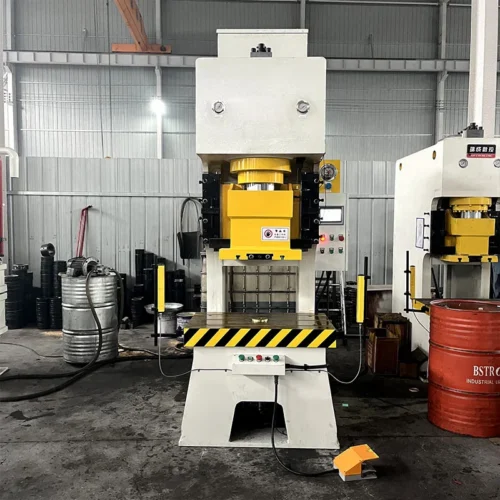

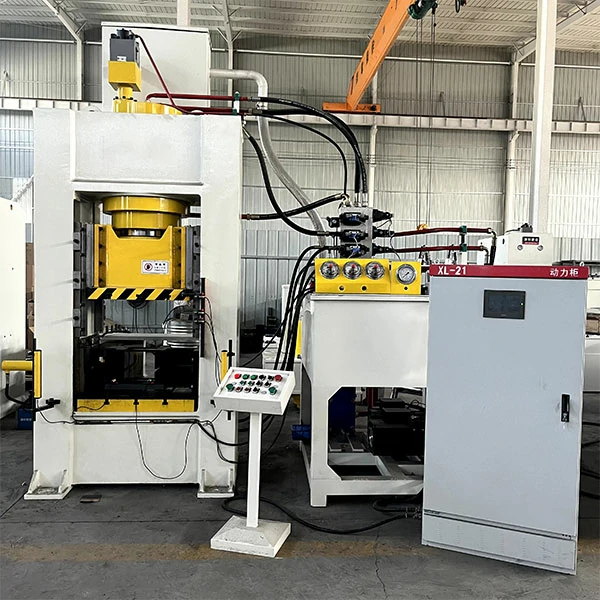
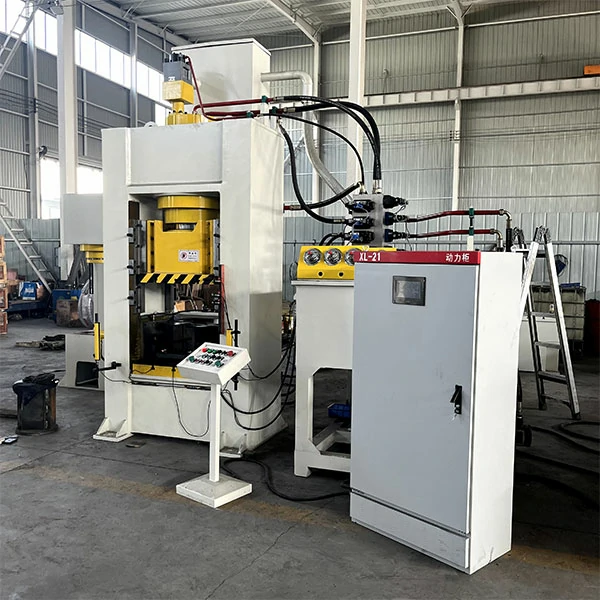
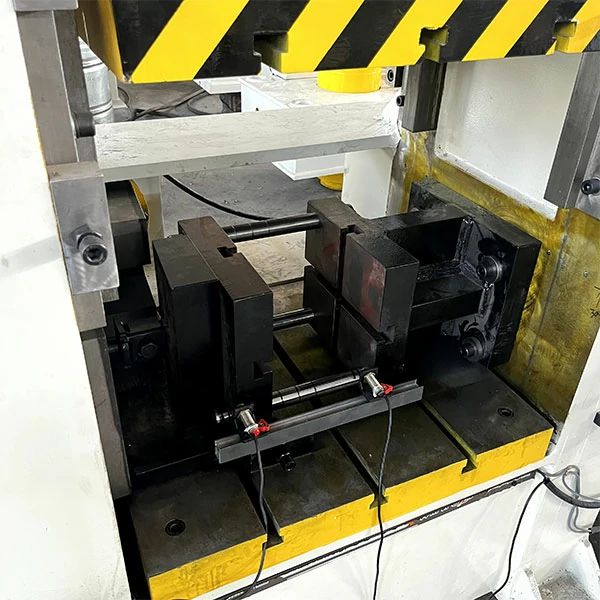
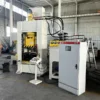
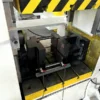

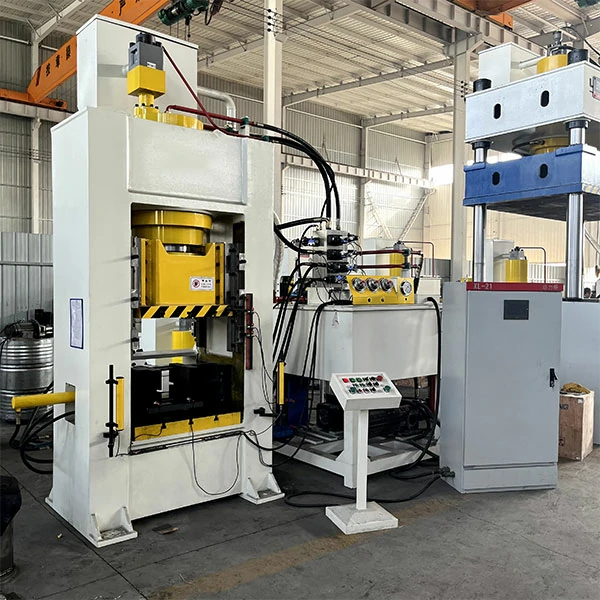
Composite molding performance can be affected by press frame rigidity, platen deflection, and uneven pressure distribution, particularly when molds or loads are positioned away from the center of the working area. A 315 ton closed frame hydraulic press carries the forming load through a continuous closed frame, providing high structural rigidity and resistance to platen deflection under off-center loading. This helps maintain more consistent platen alignment across the mold face during SMC and BMC compression molding, although actual deflection depends on load distribution, tooling design, and machine configuration.
A 700 × 800 mm worktable and 750 mm open height provide a defined working envelope for SMC and BMC tooling within these dimensional limits. The 315 mm main cylinder stroke provides sufficient platen travel for most molding setups, though the exact requirement depends on mold height, loading method, and process parameters. A dual servo drive system with 37 kW and 22 kW motors provides the hydraulic power required for rapid movement and high-pressure forming, while the PLC control system manages pressure and dwell settings for repeatable molding cycles.
Applications
SMC panel molding for compression-molded parts like automotive body panels or electrical enclosures needs steady, evenly distributed clamping pressure held through the full cure dwell, since local pressure drop at the mold edges typically shows up as incomplete resin flow or a thinner cured section near the corners of the panel rather than a uniform finish across the full molded surface.
BMC compression molding for smaller, thicker-walled parts such as electrical housings or connector bodies can benefit from stable platen alignment, particularly when charge distribution is not perfectly centered within the mold.
Composite panel consolidation for flat or lightly contoured sections benefits from a rigid frame that resists deflection under sustained clamping pressure through a long dwell cycle, keeping the panel thickness consistent from the center of the mold out toward the edges.
Metal forming operations such as blanking, bending, forming, and selected deep-drawing applications also benefit from this closed-frame rigidity. Off-center metal forming loads carry the same platen tilt risks as off-center composite charges, making structural stiffness equally critical.
Note: For off-center BMC charge placement, the allowable load position should be confirmed against the press design, tooling arrangement, and manufacturer specifications before production.
Industries
Automotive Components: SMC and BMC compression molding for automotive body panels, structural components, and other molded composite parts.
Electrical & Electronics: Compression molding of BMC electrical housings, enclosures, and insulating components.
Composite Manufacturing: Compression molding and consolidation of composite panels and molded components.
Metal Forming: Deep drawing, blanking, and other forming operations where the required force and tooling dimensions match the machine specifications.
315 Ton Closed Frame Hydraulic Press Key Features
When a composite mold is positioned off-center on the 700 × 800 mm worktable, the continuous load path of the closed-frame design minimizes angular deformation. The actual effect of off-center loading depends on the frame stiffness, tooling arrangement, load distribution, and machine configuration.
A 315 mm main cylinder stroke covers the full open-close cycle for most SMC and BMC mold heights without needing the platen to travel further than the mold actually requires between charge loading and full clamping.
The dual 37 kW and 22 kW servo motor configuration provides the hydraulic power required for rapid platen movement and high-pressure molding, helping to reduce unnecessary energy consumption during periods of lower hydraulic demand.
The PLC control system with touchscreen lets an operator store and recall pressure and dwell time settings for different SMC or BMC mold programs, instead of resetting pressure and timing by hand each time the mold changes.
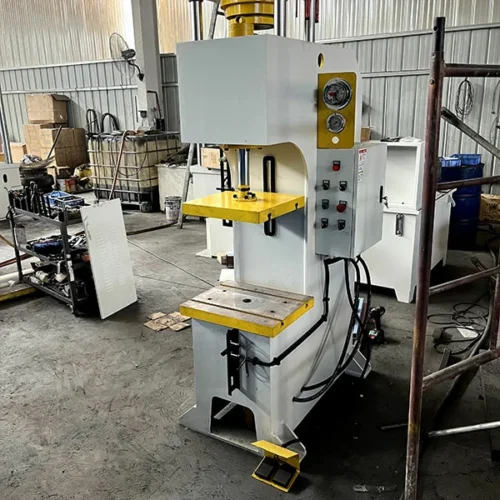
For lower-tonnage applications with smaller tooling, a C Frame Hydraulic Press may provide a more compact and economical solution.
Technical Specifications
| Parameter | Value |
|---|---|
| Rated Tonnage | 315 tons |
| Worktable Effective Area | 700 × 800 mm |
| Open Height (Daylight) | 750 mm |
| Main Cylinder Stroke | 315 mm |
| Drive System | Dual servo motors, 37 kW + 22 kW |
| Control System | PLC with touchscreen |
| Voltage | 380V |
Suitable Materials & Processes
This press is suitable for compression molding of SMC, BMC, and other composite materials, as well as selected metal forming applications. Final process suitability depends on the required forming force, mold dimensions, material behavior, and cycle parameters.
Drive and Control Configuration
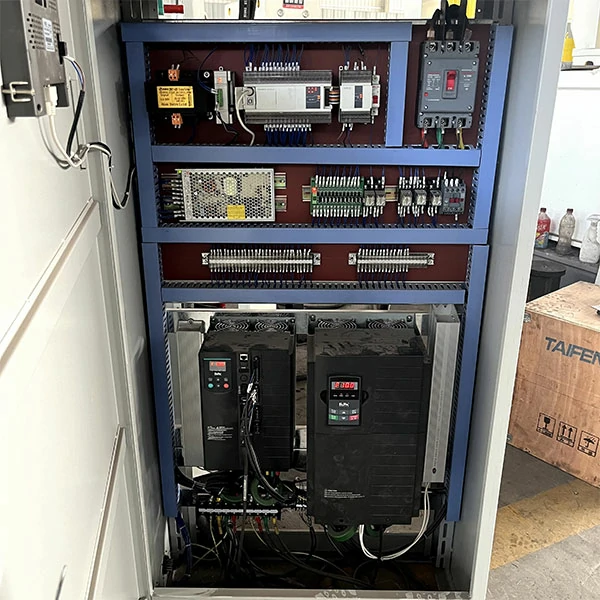
Servo Hydraulic System: The dual 37 kW and 22 kW servo motor configuration provides the hydraulic power required for rapid platen movement and high-pressure molding. Servo control can also help reduce unnecessary energy consumption during periods of lower hydraulic demand.
PLC Touchscreen Control: The PLC touchscreen allows operators to configure and store pressure, stroke, and dwell parameters for different mold programs, supporting repeatable SMC and BMC molding cycles.
Frequently Asked Questions
Why choose a closed frame over a four-column design for SMC or BMC molding?
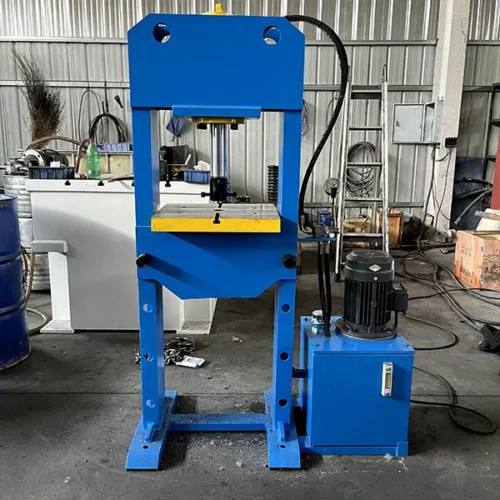
A closed frame carries forming loads through a continuous frame structure, providing high rigidity and good resistance to deflection under off-center loading. A four-column hydraulic press, however, may offer easier access for mold installation and removal.
Can this 315 ton closed frame press handle BMC charges that load off-center on the mold?
The closed-frame structure can help reduce platen deflection and maintain more uniform pressure distribution when a BMC charge is not perfectly centered. However, allowable off-center loading depends on the machine’s frame stiffness, tooling design, load position, and the actual molding process.
What does the dual 37 kW and 22 kW servo setup change compared to a single motor?
The dual servo motor configuration provides the hydraulic power required for different stages of the pressing cycle, including platen movement and high-pressure forming. The specific pump control strategy depends on the hydraulic circuit and machine configuration.
What does the PLC touchscreen add beyond basic pressure control?
The PLC touchscreen allows operators to configure and store pressure, stroke, and dwell parameters for different mold programs, supporting repeatable SMC and BMC molding cycles.
What should I confirm before ordering a 315 ton closed frame press for composite molding?
Confirm the mold footprint against the 700 × 800 mm worktable and 750 mm open height of this hydraulic press for composite molding, check that the 315 mm stroke covers the full mold open-close travel needed, and verify the 380V electrical supply matches your site setup before installation.
Confirming mold footprint, charge type, and clamping pressure needs before ordering avoids rework once a 315 ton closed frame hydraulic press is running SMC or BMC production. Our team can review your mold drawings and cycle requirements before you commit to a configuration.